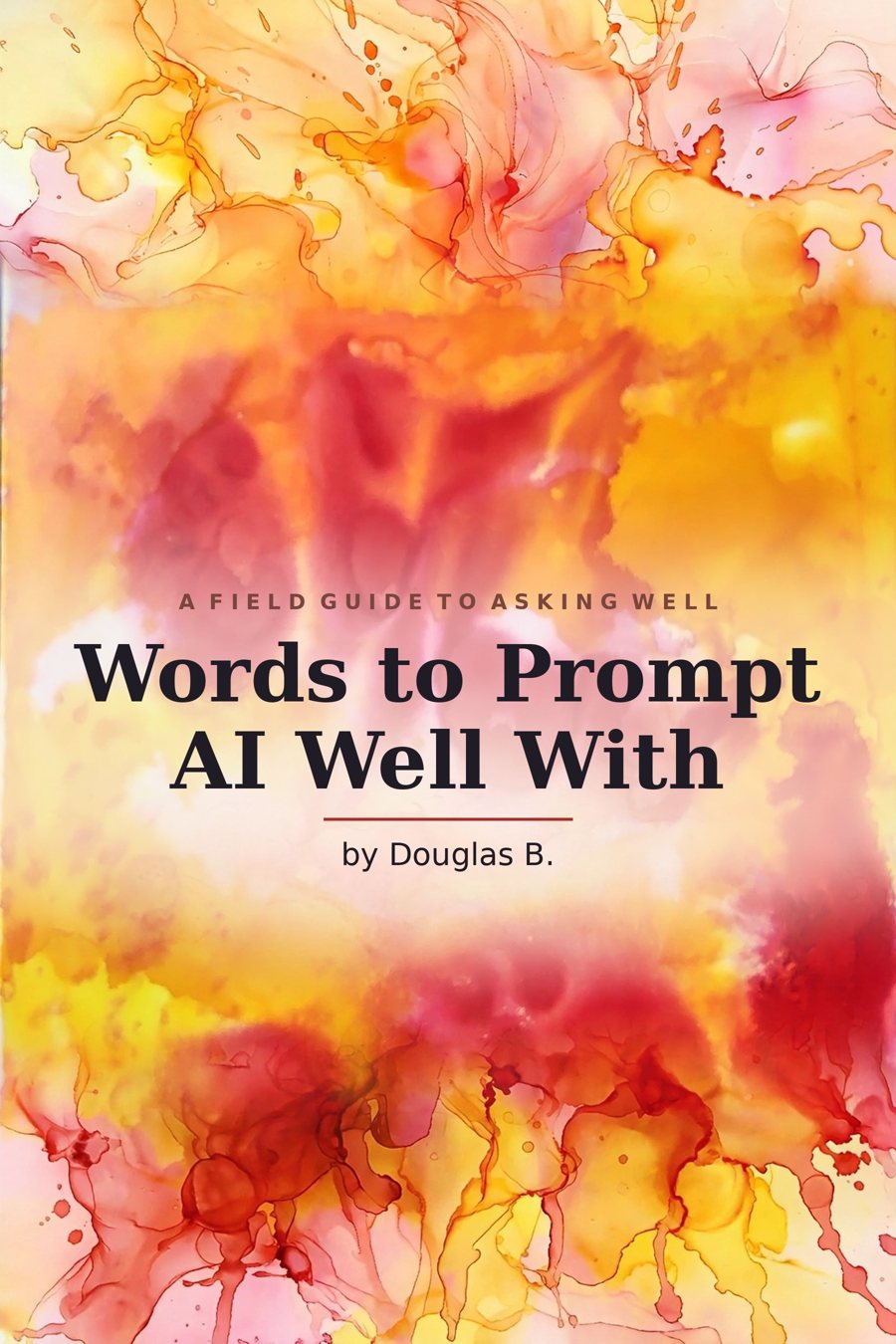
Words to Prompt AI Well With
A FIELD GUIDE TO ASKING WELL
How to Prompt AI for Better Answers: A Beginner-Friendly Guide to Asking Questions That Get Better Results
Start reading
Read the introduction
Most people blame the machine when an answer comes back bland, vague, or quietly wrong. Usually the machine is innocent. It answered the question it was actually given — and the question it was given was a shrug dressed up as a sentence. "Tell me about mortgages" is not really a question. It is a topic, handed over with no size, no angle, and no purpose, and the answer it earns is exactly as shapeless as the ask.
Here is the good news this whole book rests on: you do not need longer prompts. You need stronger words. A single well-chosen verb — rank, exclude, steelman, audit — does more work than three paragraphs of background, because a verb tells the machine what to do, not just what to talk about. Qualifiers do the same quiet work. "For a first-time buyer in Ohio, in under two hundred words, with the costs in a table" is not a longer request; it is a placed one. The answer improves because the aim improved.
This book collects seventy-two of those words, grouped by the job they do: sharpening a question, constraining an answer, structuring it, challenging it, verifying it, and creating with it. Each entry shows a prompt twice — once the way a beginner types it, once with the word in it — and then does it again with a second example from a different corner of life, so you can see the difference instead of being told about it — and each entry closes with a short note on how the word itself can go wrong, and one sentence that places it perfectly. You do not need all seventy-two. Most people find that six or eight of them transform nearly every conversation they have with an AI.
A note on the title, since a careful reader will have noticed it ends with a preposition. It does. Some rules exist to make language clearer, and some exist only to make writers nervous. This book is firmly about the first kind.
Use it like a toolbox, not a textbook. Keep it near wherever you type. When an answer disappoints you, do not start over — reach for a word.
---
Free editions
Free. No account, no email, nothing to sign up for.
Audio edition
The whole book, read aloud. 12 parts · 2 hours 58 minutes total.
Press play on any part — the book plays straight through to the end.
- DownloadIntroduction2:03
- DownloadHow This Book Got Learned10:42
- DownloadPart One — Sharpen22:20
- DownloadPart Two — Constrain21:44
- DownloadPart Three — Structure22:09
- DownloadPart Four — Challenge22:29
- DownloadPart Five — Verify22:55
- DownloadPart Six — Create22:54
- DownloadRecipes and Prompt Templates17:33
- DownloadThe Practice Room and Field Guide8:01
- DownloadQuick Reference4:32
- DownloadA Word at the End1:02
About the book
You don't need longer prompts. You need stronger words.
Most answers from AI disappoint for a simple reason: the question was a topic, not an assignment. “Tell me about mortgages” earns an encyclopedia entry — average in every direction, useful in none. A single well-chosen word — rank, exclude, audit, steelman — tells the machine what to do, and the answer sharpens on the spot.
Words to Prompt AI Well With collects seventy-two of those words in six groups: sharpen, constrain, structure, challenge, verify, create. Every entry teaches by doing. You see a prompt the way a beginner types it, then the same prompt with the word in it, then a plain note on why it worked — plus a second example from another corner of life, a short warning about how the word itself can go wrong, and one sentence that places it perfectly.
Between the introduction and the words sits a short true story: how this vocabulary was learned in real work, one misunderstanding at a time, between the author and the AI assistant he works with every day.
No code, no jargon, nothing to memorize. Pick the six words that match the way your own questions usually fail, use them until they feel like typing, then come back for six more.
Inside the book
- Part One — SharpenSpecify · Quantify · Itemize · Compare · Rank · Prioritize · Exemplify · Define · Pinpoint · Probe · Anchor · Target
- Part Two — ConstrainConstrain · Exclude · Assume · Bracket · Budget · Limit · Simplify · Localize · Timebox · Role · Filter · Scope
- Part Three — StructureSequence · Outline · Tabulate · Summarize · Compress · Expand · Decompose · Recompose · Stage · Chunk · Layer · Map
- Part Four — ChallengeSteelman · Invert · Critique · Defend · Disagree · Counterfactual · Anticipate · Simulate · Stress-Test · Falsify · Worst-Case · Rebut
- Part Five — VerifyVerify · Audit · Cite · Cross-Check · Trace · Estimate · Flag · Reconcile · Sanity-Check · Grade · Refresh · Benchmark
- Part Six — CreateDraft · Invent · Narrate · Translate · Rewrite · Vary · Iterate · Formalize · Brainstorm · Voice · Combine · Script
- Closing chaptersRecipes · Prompt Templates — Ready to Copy · The Practice Room · Field Guide · Quick Reference · A Word at the End
The art
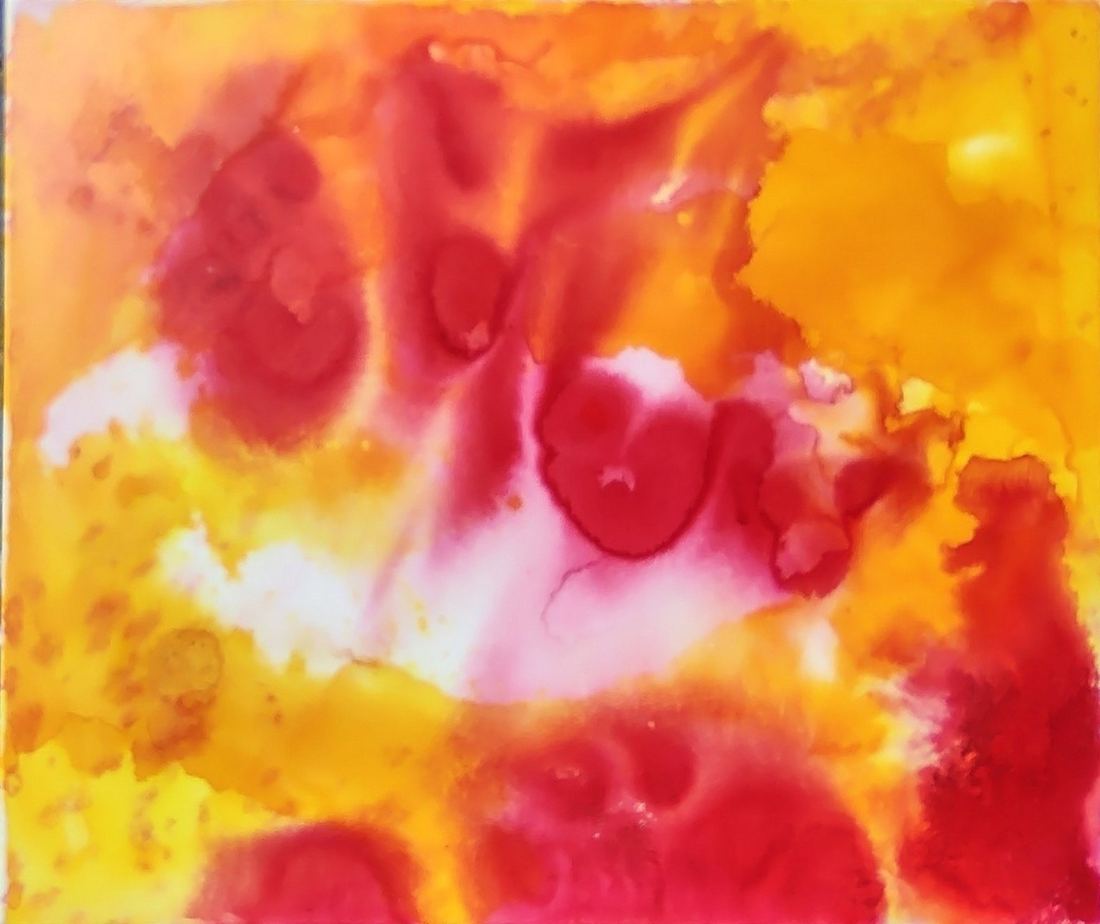
The original painting, by Douglas John Brownfield.
Every picture in this book grows from a single painting: an abstract work in ink on canvas by the artist, red and gold and weather. It appears exactly once in these pages, as a full plate before the story chapter, entirely itself — no crop, no treatment, no improvement.
Everything else you see — the cover, the part openers, the chapter pieces — is a variation on that one painting, made with AI tools working from the original under direction. Some stay close, nearly quotations. Some travel far, until the washes become weather over hills or a sky full of ordered cards. All began in the same place.
That seemed only honest. This is a book about directing a machine with words — precisely chosen, honestly bounded, checked afterward. The pictures were made the same way the text teaches: one strong source, carefully worded instructions, and a human deciding what is finished.
About the author
The author’s page — the painter, the builder, and the other books — lives on the home page.