What Kind of AI Is That?
Know what you're talking to.
The Types of AI Models, What Each Kind Does, and How to Tell Them Apart
Start reading
Read the introduction
New AI models arrive every week. Each arrives with a name, an announcement, and a set of claims, and the name is the least informative part of the package. A name is marketing. It tells you who is selling and how the seller would like the model to feel — fast, smart, advanced, friendly. It does not tell you what the model is, what it takes in, or what it gives back. A reader who follows the names is following the one part of the field guaranteed to change.
The turnover is not an impression. It is the record. In the course of a single year, three of the best-known model names in the world ceased to exist. DALL·E, OpenAI's image model, was retired in May 2026. Imagen, Google's image model, was shut down that August. Sora, OpenAI's video model, closed in 2026 — the application in April, the developer service in September — and was not replaced. The work did not stop with the names. More images are generated now than when DALL·E was the household word, under names few people had heard a year earlier. Video generation continues without its most famous name. What ended was the names.
This book sorts by kind instead. A kind is determined by a short set of questions that can be asked of any model, whatever its name: What does it take in, and what does it give back? Where does it run — in a company's data center, or on a device in your hand? And can you hold it: are its weights published, under a stated license, or can it only be visited through the maker's service? Asked of a new announcement, these questions place the model on the map in about a minute. The answers change slowly. The types in this book — language models, image models, the retrieval models that work quietly underneath search — have been recognizable for years, and they will still be recognizable when the current lineups have been replaced.
One distinction cuts across every kind and is treated throughout as what it is — a property of a model, not a kind of its own. Some models are published as weights a user can download and run; others exist only inside the maker's service. That difference decides who controls the tool, what it costs to keep using it, and whether it can be taken away on a schedule the user does not set. It is also a distinction with fine print: published weights come under named licenses — MIT, Apache 2.0, non-commercial terms, vendor-specific terms — that differ in what they permit. Wherever this book describes a model as open, it names the license, because "open" by itself does not say enough.
The map is honest about its own limits, because kinds are steadier than names, not frozen. Two chapters in Part One record kinds in the act of changing. Reasoning — models that work a problem in steps before answering — stood as its own kind while separate reasoning models were sold. By late 2026 it had been folded into the flagship language models as a setting, a matter of how hard the model is told to think. Multimodal ability, one model handling text, images, and sound natively, is further along the same path: less a shelf of its own, more a property every flagship is expected to have. Both chapters are kept, and both changes are stated where they happened, because how a kind behaves over time is part of what a reader needs to know. At the other end of the map, the final chapter covers kinds still forming, and says plainly where the record is thin.
Every named model in this book is a dated example, and the date is stated up front: the roster in these chapters was verified as of November 2026. A book about a field moving at this speed has two choices — pretend to be timeless, or date itself. This one dates itself. The kinds are the durable part; the examples are the perishable part, and they are labelled as such, each chapter closing with the shelf as it stood in November 2026. Printings stand as their dated selves. The online edition is updated in place as lineups change, each update carrying its version line and date, so a reader can always tell which snapshot they are holding.
Sorting by kind also pays at the one moment the names are most expensive: the moment of choosing. A name can be new, well reviewed, and entirely the wrong type for the job — a strong language model asked to search a private archive, a strong image model asked to keep figures consistent across a report. Most disappointments with these tools are mismatches of kind, not failures of quality. A reader who can name the kind a job needs, and recognize the kind a tool actually is, will choose better than a reader who knows every current name by heart — and will still be choosing well after those names are gone.
The arrangement follows from that. Part One is the map: one chapter per kind, what it is, what it is for, and what currently stands on its shelf. Part Two is the durable skill — how to read any new model announcement, its name, and its published scores, and place it yourself. Part Three matches kinds to jobs, and closes with the one thing that is not a kind at all: the layer of loops, tools, and permissions built around models, which makes them act rather than merely answer, and which is covered separately so the word model is never stretched to cover it.
This book is for anyone who uses these tools, chooses them, pays for them, or is simply tired of pretending to keep up with the names. It assumes no technical background and no patience for jargon; terms are explained where they are used. The title is the question the whole book teaches its reader to answer. Ask it of the next announcement — what kind of AI is that? — and the announcement becomes a good deal easier to read.
---
Free editions
Free. No account, no email, nothing to sign up for.
Audio edition
The whole book, read aloud. 5 parts · 2 hours 7 minutes total.
Press play on any part — the book plays straight through to the end.
About the book
New AI models arrive every week, each with a name, an announcement, and a set of claims — and the name is the least informative part of the package. Inside a single year, three of the most famous model names in the world — DALL·E, Imagen, and Sora — ceased to exist, while the work they did continues under other names. A reader who follows the names is following the one part of the field guaranteed to change.
What Kind of AI Is That? sorts models by kind instead: what a model takes in, what it gives back, where it runs, and whether you can hold the weights yourself, and under what license. Part One walks the nine kinds — large language models, reasoning models, image, video, and audio models, multimodal models, small and on-device models, the embedding models inside search, and the frontier shelf of world models and robot-action models still forming. Part Two teaches the durable skill: five questions that sort any new announcement, how to read model names and numbers, and how to read benchmarks without tears. Part Three matches kinds to jobs, and closes with the layer built around models — the loops, tools, and permissions that make them act — which is not a kind, and is covered separately so the word model is never stretched to cover it.
The book is honest about movement inside the map itself: reasoning began as its own kind and has melted into a setting on the flagship models, and multimodal is becoming a property rather than a shelf. Both changes are stated where they happened, because how a kind behaves over time is part of what a reader needs to know.
Every named model is a dated example. The roster was verified against the makers' own pages, papers, and model cards as of November 2026, and each chapter closes with the shelf as it stood then. The kinds are the durable part; the examples are labelled as the perishable part.
Inside the book
- Part One — The KindsLarge language models · Reasoning models · Image models · Video models · Audio models · Multimodal models · Small and on-device models · Embedding and retrieval models · The frontier shelf
- Part Two — How to Read a New ModelThe five questions · Names and numbers · Benchmarks without tears
- Part Three — ChoosingMatch the kind to the job · The layer — loops, tools, and models in combination
- Back MatterThe Snapshot Statement · Sources · The Map on One Page
The art
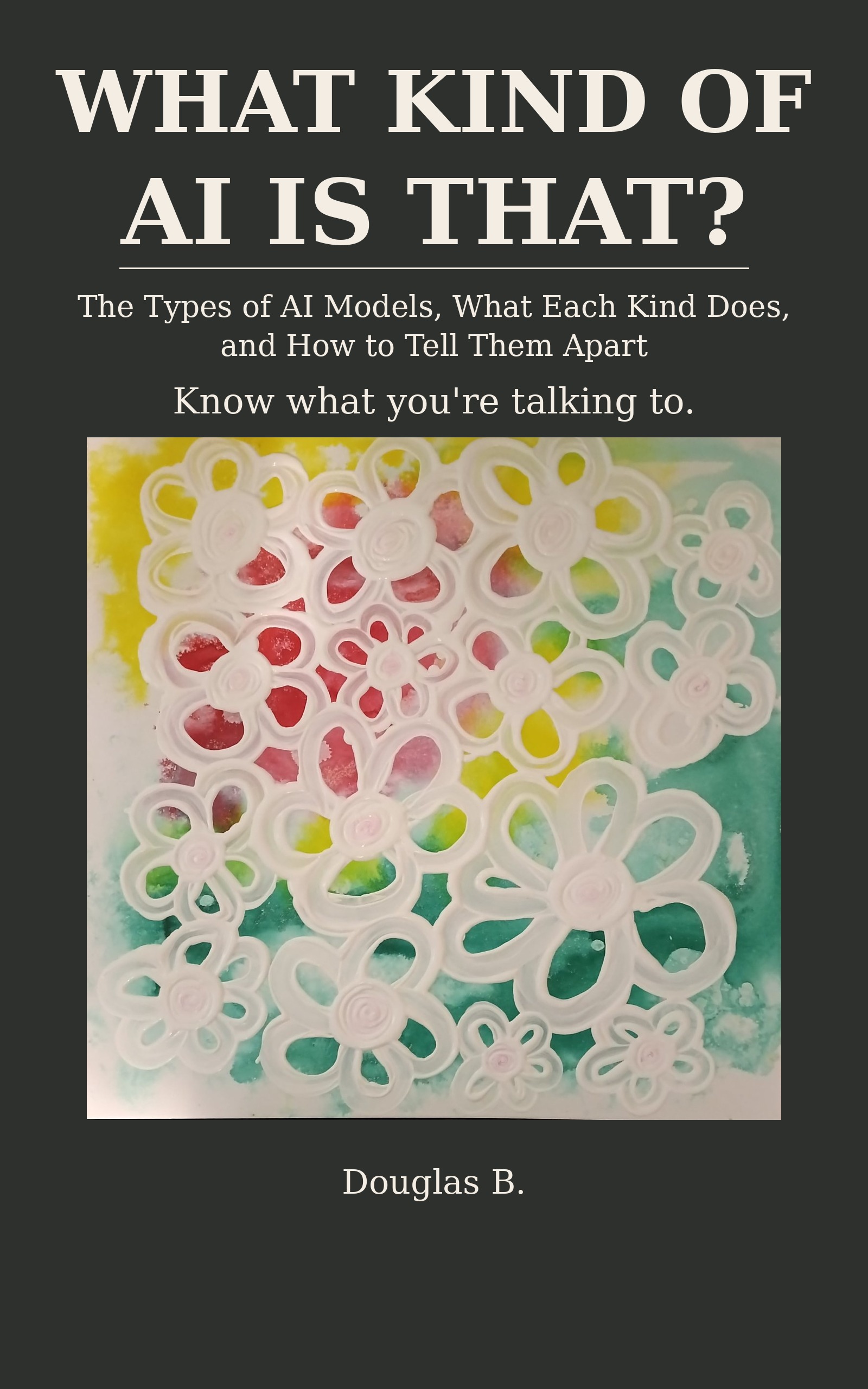
The art in this book is one painting, three times — and then once more, finished. A canvas by the artist, photographed as it was made: first the colour field, then yellow worked in across the top, then white loop-flowers raised over the whole field — loops, hundreds of them, standing on one shared ground. The stages open the parts of the book in order, and the finished piece is on the cover.
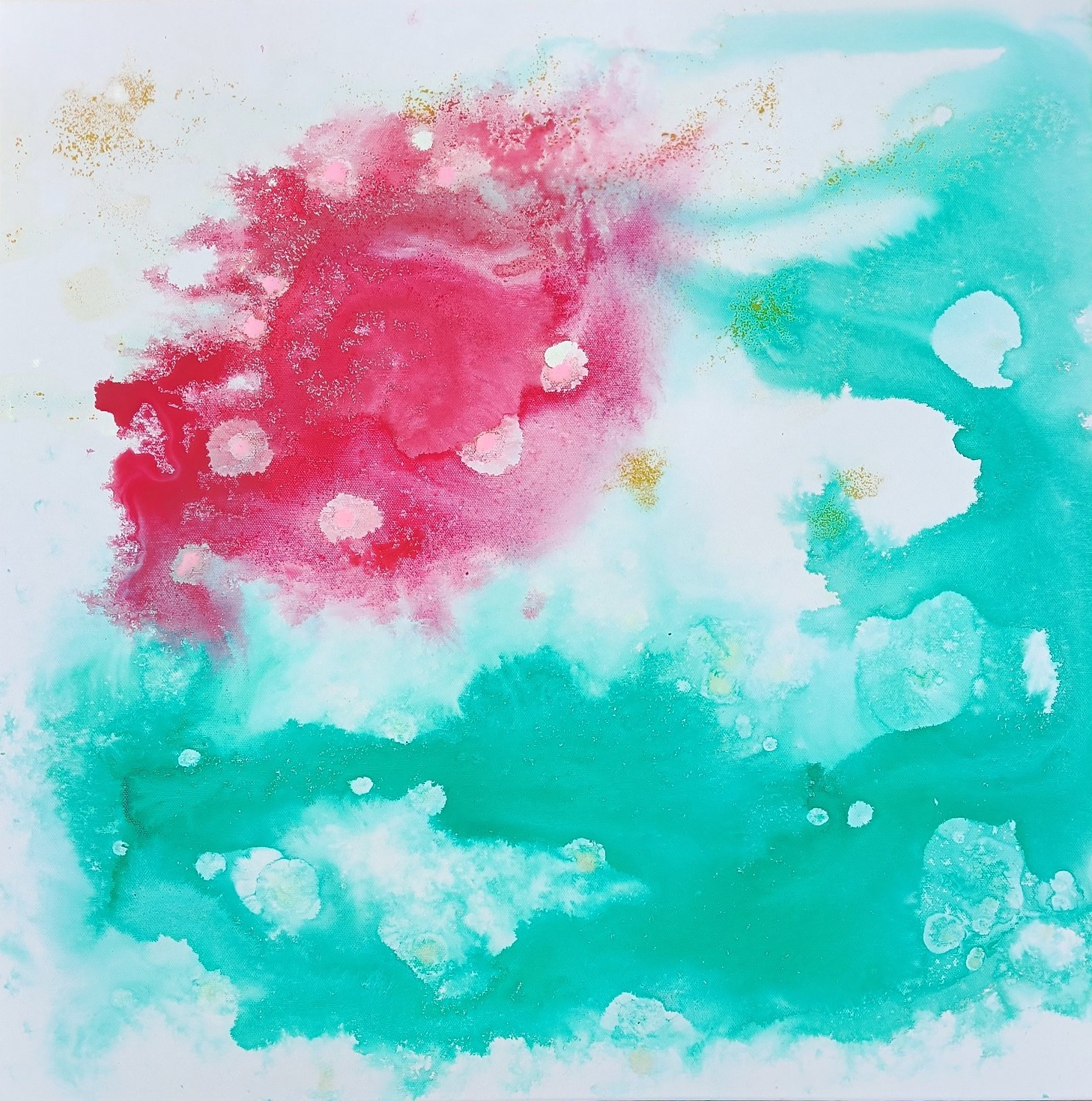
Stage one — the first washes. It opens Part One.
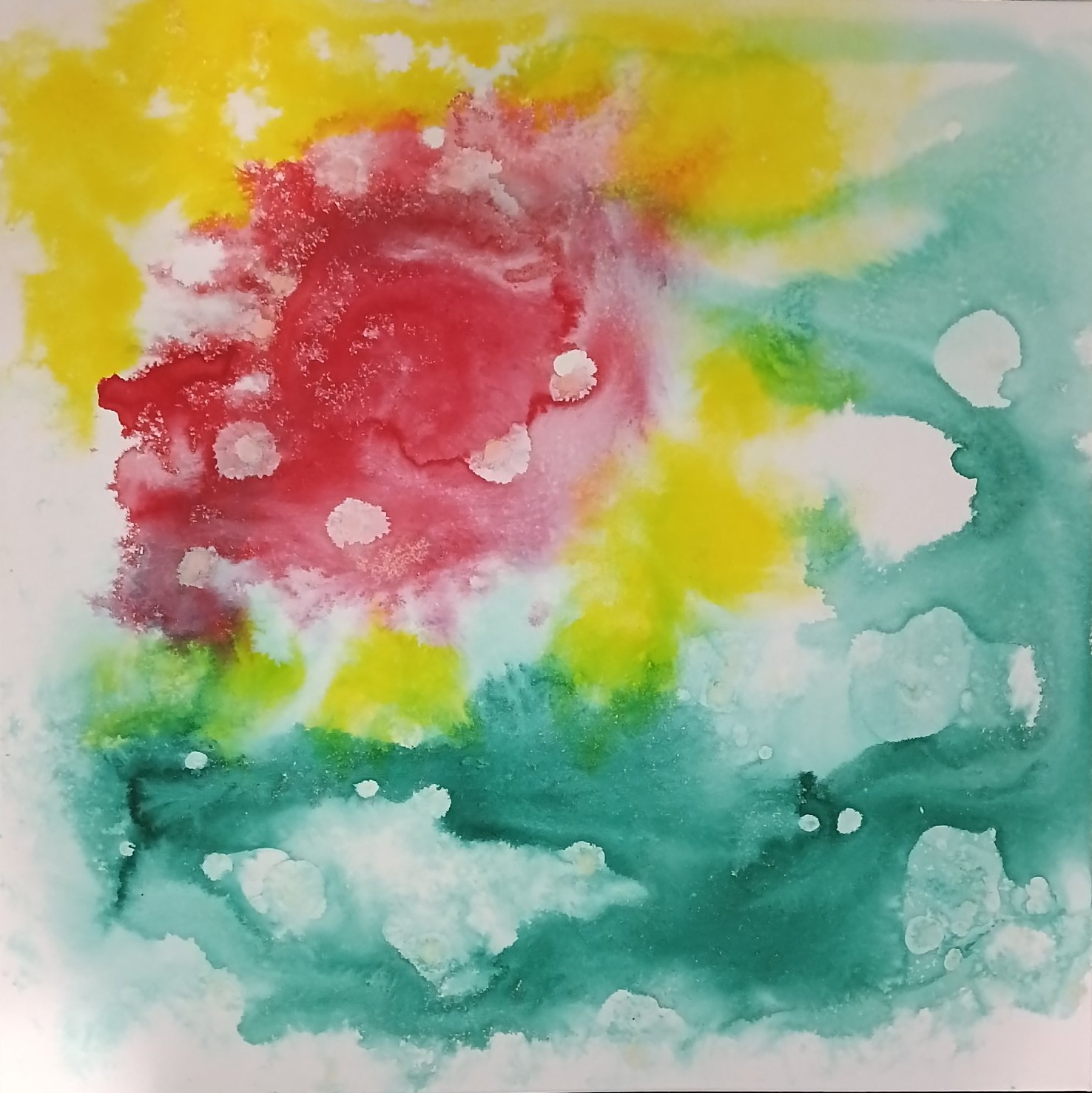
Stage two — yellow laid in. It opens Part Two.
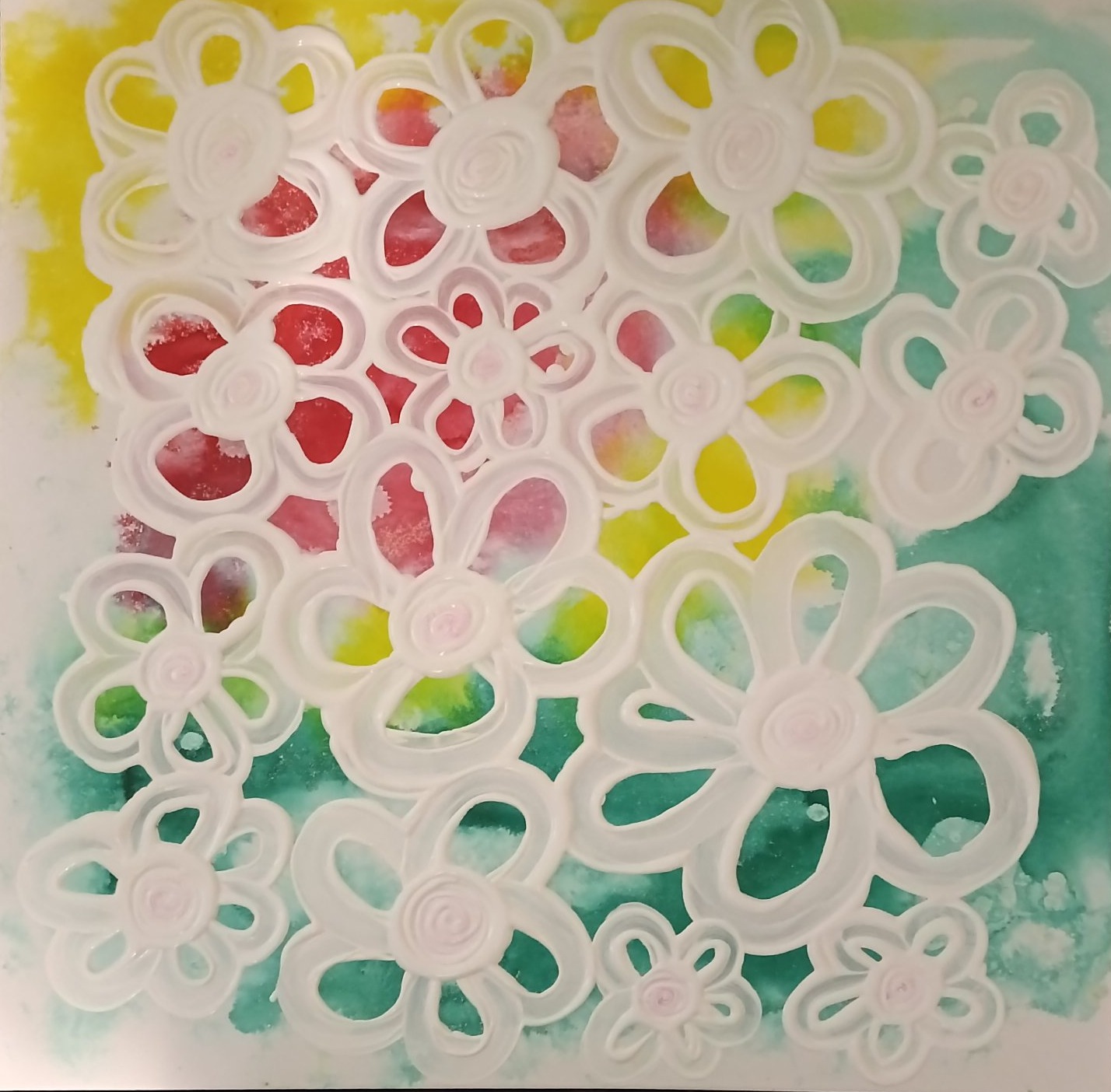
Stage three — the finished piece. It opens Part Three, and it is the cover.
Painting and photographs by Douglas John Brownfield. The plates are cropped from the photographs to the canvas only, with the colours unaltered. The cover setting and the part plates derived from them were made by the assistant, as described in the book's About the Art: the finished painting set full-width on a dark ground sampled and darkened from its own deep teal, the part plates cropped as bands and details in thin cream frames, light sharpening only. The painting itself is nowhere retouched.
About the author
The author’s page — the painter, the builder, and the other books — lives on the home page.